Wash & decontamination
Quoted on inspection
The reset before anything else
- Two-bucket foam wash
- Iron fallout removal
- Tar and adhesive removal
- Clay bar treatment
- Tyre and trim dressing
Home/Paint Correction
 Authorised Turtle Wax StudioTellapur, Hyderabad
Paint Correction
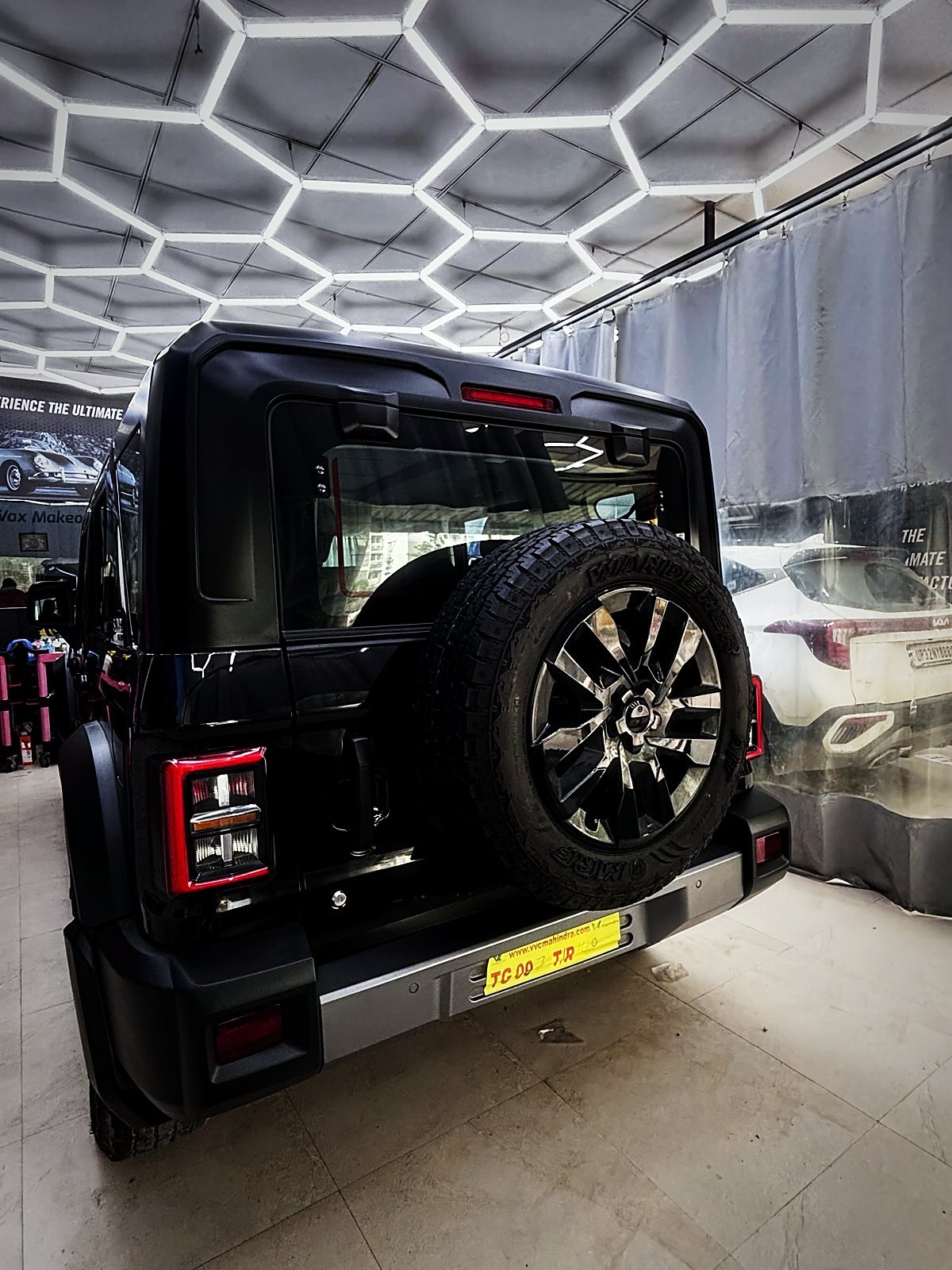
Machine polishing that removes swirl marks, oxidation and holograms to bring back true, mirror-flat reflection. It is also the stage that decides whether a coating looks spectacular or just seals in damage.
Why it matters
Clear coat picks up damage long before you notice it. Brush washes, dry wiping and years of sun leave a haze of fine scratches that scatter light — which is why a dark car looks flat in daylight and lit up with cobwebs under a streetlamp.
Polishing removes a few microns of clear coat to level that damage out. Done right it is transformative. Done carelessly it burns through an edge, and that is a respray. This is why we measure before we touch anything, and why we will tell you when a panel has nothing left to give.
Levelled out rather than filled in, so they do not reappear after the first wash.
Dead, chalky clear coat cut back to fresh paint underneath.
The buffer trails a rushed job leaves behind, refined out completely.
Every coating we fit is applied over corrected paint. Sealing in swirls locks them there for years.
The process
Options
Which one is right depends entirely on the condition of your clear coat — that is what the inspection is for.
Quoted on inspection
The reset before anything else
Quoted on inspection
One pass, big improvement
Quoted on inspection
The full job
Quoted after inspection — the car in front of us decides the number, not a price list.
Questions
Not when it is measured. We take paint depth readings before we start and choose the least aggressive combination that removes the defect. The risk with machine polishing is taking too much clear coat off an edge or a high spot — which is exactly why the gauge comes out first and why we will refuse a panel that has already been polished thin.
Single-stage is one pass that removes light swirls and restores gloss — a big visible improvement for most daily cars. Two-stage adds a dedicated cutting pass before the refining pass, which is what deeper scratches and heavy oxidation need. We recommend based on what the test section shows, not on what we would rather sell.
In almost every case, yes. A coating is transparent and it locks the surface in as it finds it. Coating over swirl marks means looking at those swirl marks for the next three to five years. Correction is the part of a coating job that actually creates the result.
No, and be wary of anyone who says otherwise. If a scratch catches your fingernail it has gone through the clear coat, and polishing cannot bring that back — that is a paint repair. We will tell you honestly which marks will disappear and which will only improve.
The correction itself is permanent — the damage is gone. How long the car keeps looking that way depends on how it is washed afterwards. Automatic brush washes will put the swirls straight back within months, which is why we finish with protection and talk you through aftercare.
Bring the car in for a free inspection. We will take depth readings, correct a test section, and show you the difference side by side before you commit to anything.