Home/Paint Protection Film
 Authorised Turtle Wax StudioTellapur, Hyderabad
Paint Protection Film
The only thing that actually stops stone chips.
A coating makes your paint easier to clean. Film is what stands between your bonnet and the gravel coming off the Outer Ring Road at 90 km/h. PPF is a thick, clear, self-healing urethane layer fitted over your paint — invisible when it's done properly.
How it works
A sacrificial layer, not a shiny one
PPF is roughly 190 microns of clear thermoplastic urethane with an elastomeric top coat. When a stone hits, the film absorbs and spreads the impact instead of letting it punch through your clear coat. Light scratches and swirl marks in the film close up on their own with heat — park in the sun or pour warm water over it and they disappear.
It is fitted wet, squeegeed out, and the edges are wrapped around panel lips so there is no visible line. On a good fit you will not know it's there until something hits it.
Stone chips
The reason most people fit it. Bonnet, bumper and fenders take the worst of it on highway runs.
Scratches and scuffs
Trolley knocks in the parking lot, bag scuffs on the boot lip, nails around door handles.
Resale value
Original paint with no touch-up history is worth real money. Film keeps it original.
Removable
Peels off cleanly years later, leaving the paint underneath exactly as it went on.
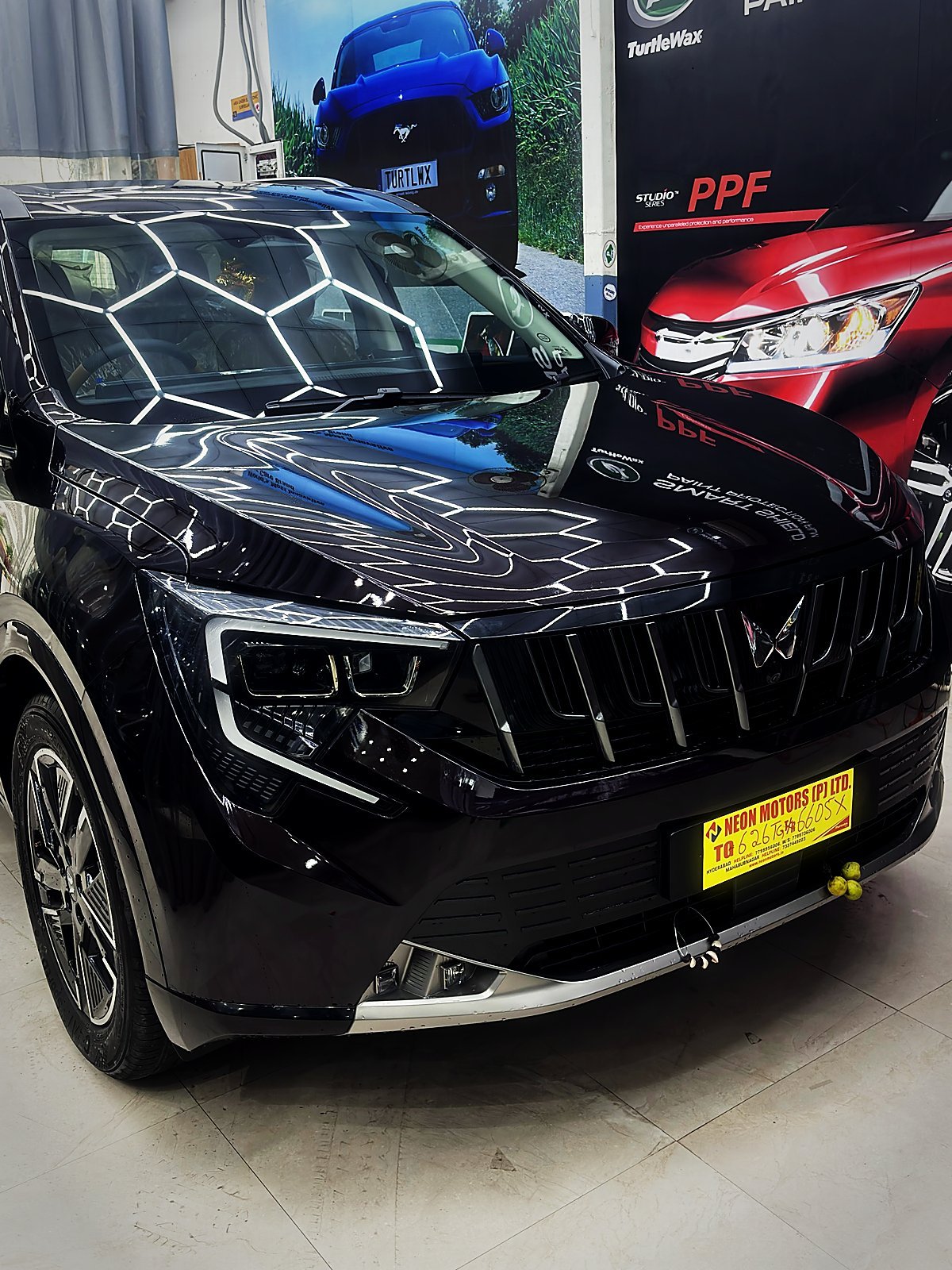 ppf-hero.jpg1200 × 1600 (portrait)
Coverage
How much of the car to cover
You don't have to film the whole car. Most customers start with the front, because that's where 90% of chips land. Prices below are starting points for a hatchback — bring the car in and we'll measure it.
Bonnet, front bumper, both front fenders and wing mirrors. The panels that face oncoming road debris. This is the sensible starting point for most cars.
Quoted on inspection
Everything in the front kit plus headlights, the A-pillars and roof leading edge, and door cups and handles. Aimed at cars doing regular highway distance.
Quoted on inspection
Every painted panel wrapped. Nothing exposed, nothing to worry about. This is what we fit on new cars people intend to keep original.
Quoted on inspection
Headlight film, boot-lip guard, door-edge guards, matte-finish film over gloss paint, and sunroof surround. Fitted alone or with any kit above.
Quoted on inspection
Quoted after inspection — body size, panel complexity and film choice all change the figure, and SUVs take more film and more hours.
Straight answers
PPF or ceramic coating?
They do different jobs, and plenty of cars get both — film on the front, coating over the whole car including on top of the film.
| What you want | PPF | Ceramic coating |
|---|---|---|
| Stops stone chips | Yes | No |
| Stops deep scratches | Yes | No |
| Heals light marks on its own | Yes, with heat | No |
| Water beading and easy washing | Good | Excellent |
| Adds gloss and depth | Slight | Yes |
| UV and chemical resistance | Yes | Yes |
| Typical lifespan | 5–7 years | 3–5 years |
| Typical cost | Higher | Lower |
| Removable later | Yes, cleanly | Wears off |
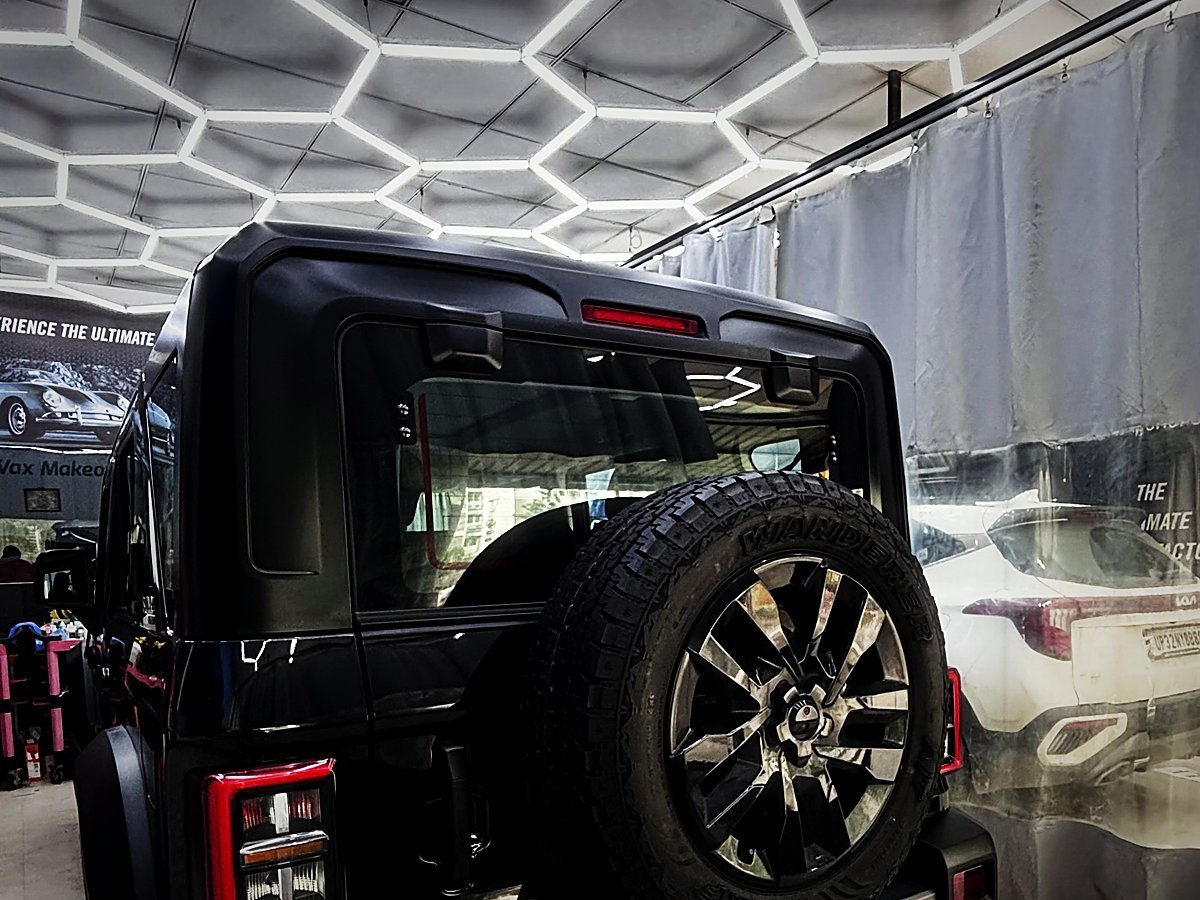 ppf-process.jpg1200 × 900
On video
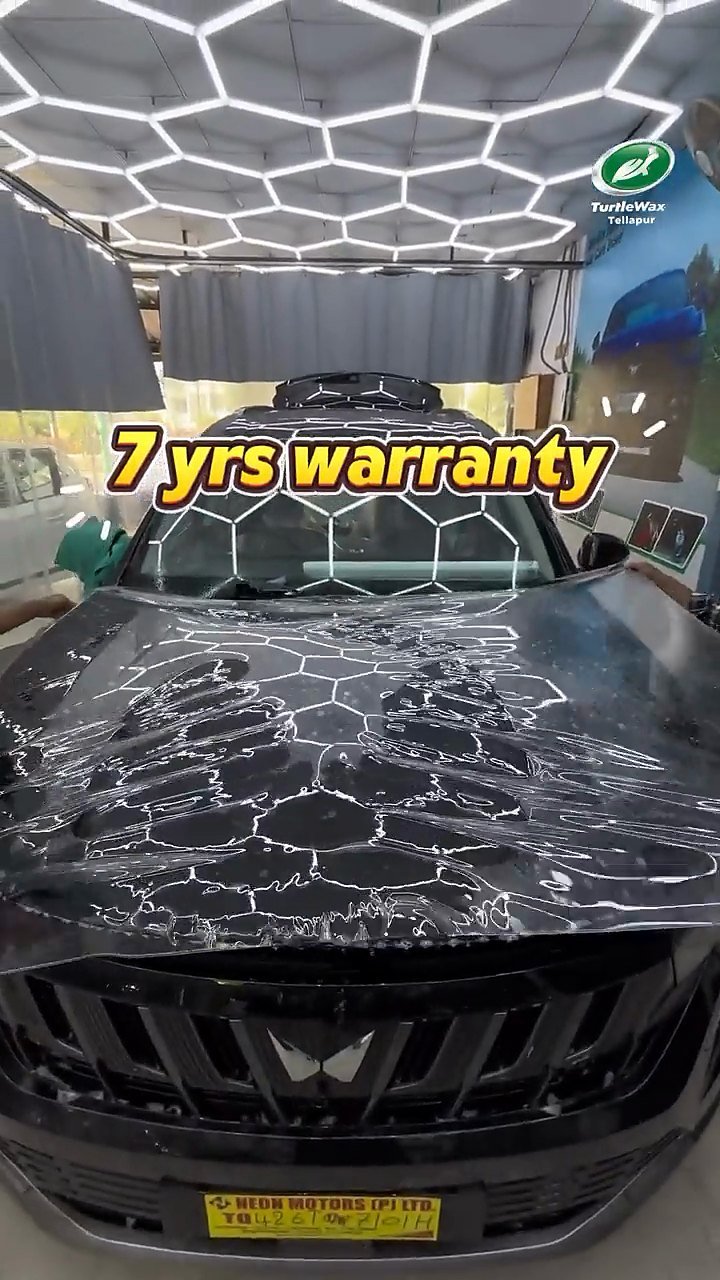
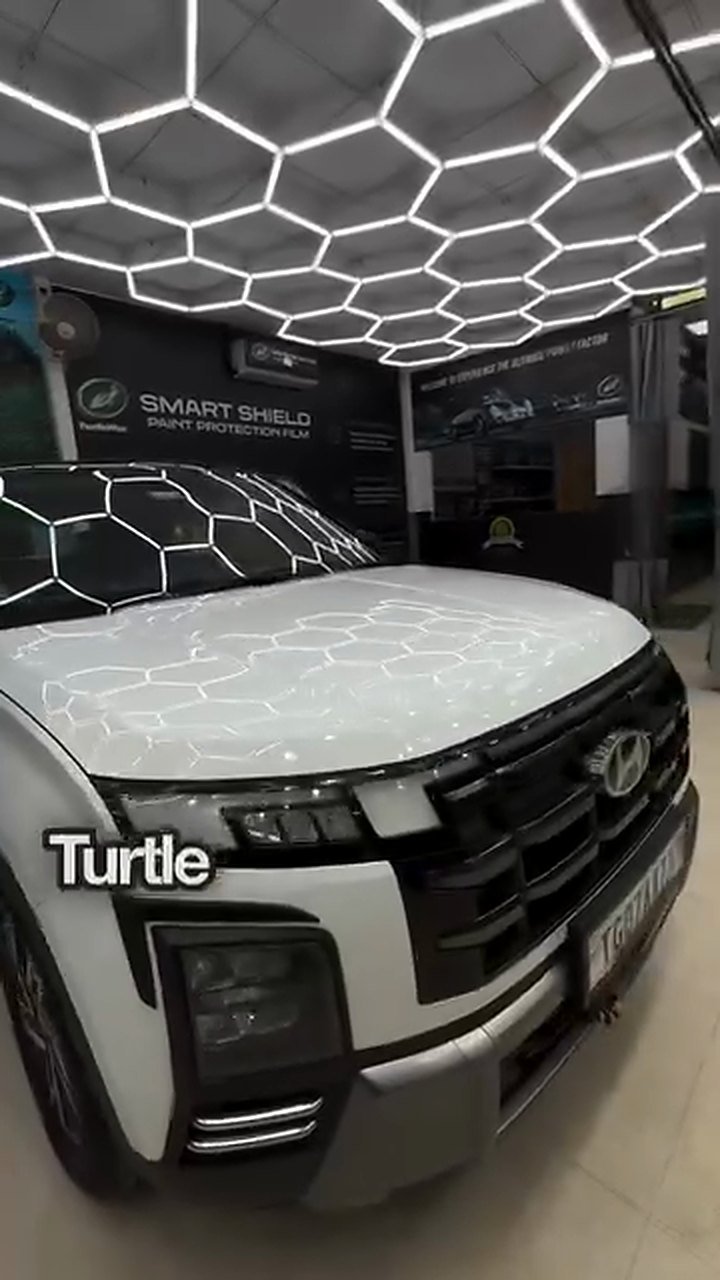
Watch a front kit go on
Real film jobs from the Tellapur bay. Tap once and it plays right here.
 Reel
Reel
 Reel
Reel
Questions
PPF, answered
Will I be able to see the film?
On a proper fit, no. The film is optically clear and the edges are wrapped around panel lips rather than cut on the visible face. Where a wrapped edge isn't possible, the cut line sits a few millimetres in from the edge and is very hard to spot. Badly fitted PPF shows lifted edges and trapped dirt lines — that's a fitting problem, not a film problem.
How does self-healing actually work?
The top coat is elastomeric. Light scratches and swirl marks deform it rather than cutting it, and heat lets it return to shape. Warm water, a heat gun on low, or a few hours parked in Hyderabad sun will close them. Deep cuts that go through the top coat won't heal.
How long does fitting take?
Two to three days for a front kit, four to five for full body. Most of that is prep and careful edge work. Add 48 hours of cure time before the first wash — we'll tell you exactly when at handover.
Can I put a ceramic coating on top of PPF?
Yes, and we'd recommend it. Coating over film adds water beading and makes it much easier to clean, while the film underneath does the impact protection. It also keeps the whole car consistent, since coated and uncoated panels behave differently in rain.
What if I want to remove it?
Quality film peels off cleanly with heat, leaving the paint as it was. This is exactly why film is popular before resale. Cheap film left on far too long can leave adhesive residue — another reason we don't stock the cheap stuff.
Does it work on a matte or wrapped car?
Yes. There's matte-finish PPF for cars that are already matte, and gloss film that can be fitted over a vinyl wrap. Tell us what's on the car when you book so we order the right film.
Is it worth it on an older car?
Often not, and we'll say so. If the paint already has chips and swirls, film locks that in. On an older car, correction plus a coating usually gives you more for the money. Film makes most sense on a car under two years old or freshly repainted.
Bring the car in for a free inspection
We'll take a paint depth reading, walk around it with you, and tell you honestly which panels are worth filming. No charge, no obligation.